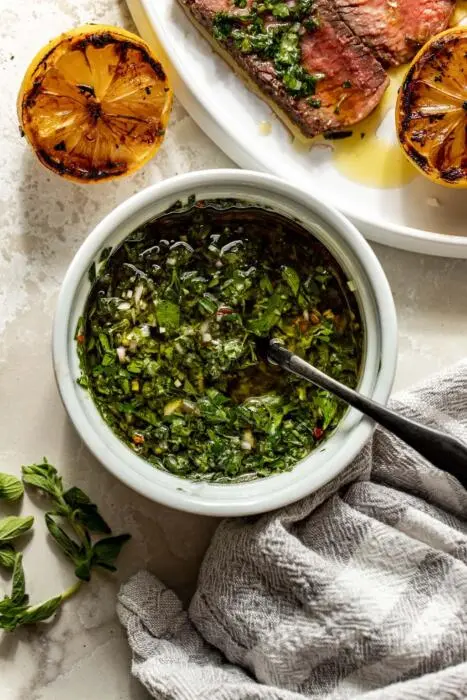
Imagine sinking your teeth into a perfectly grilled steak, its savory crust giving way to a juicy, tender interior. Now, picture that experience amplified by a vibrant, herbaceous sauce that dances on your palate. That, my friends, is the magic of Argentine Chimichurri. This isn’t just a sauce; it’s an explosion of fresh flavors, a testament to simple ingredients transformed into something truly extraordinary.
This Classic Chimichurri Sauce, bursting with fresh herbs and a zesty kick, is the perfect partner for all your summer grilling adventures. Whether you’re slathering it over grilled steak, chicken, succulent shrimp, or even vibrant grilled veggies, it’s guaranteed to elevate every bite.
Why You’ll Love This Chimichurri Recipe
Forget bland condiments and heavy sauces! Chimichurri is all about brightness and freshness. It’s incredibly easy to make, requiring no cooking at all, and the vibrant flavors are sure to impress your family and friends. Here are just a few reasons to fall in love with this recipe:
- Unmatched Freshness: The combination of fresh parsley, oregano, garlic, and shallots creates a symphony of herbaceous flavors.
- Zesty Kick: Red wine vinegar adds a delightful tang, perfectly balanced by the richness of olive oil.
- Versatile Delight: It’s not just for grilling! Use it as a marinade, a salad dressing, or even a dip for crusty bread.
- Quick & Easy: Ready in just 10 minutes, this sauce is perfect for busy weeknights or impromptu gatherings.
Understanding Chimichurri: Beyond the Basics
Chimichurri is more than just a sauce; it’s a cultural staple in Argentina and Uruguay. While variations exist, the core components remain the same: fresh herbs, garlic, olive oil, vinegar, and a touch of spice. The beauty lies in its simplicity and the ability to customize it to your own taste.
There are generally two types of chimichurri: chimichurri verde (green chimichurri), which is the most common, and chimichurri rojo (red chimichurri), which includes smoked paprika and sometimes tomatoes for a deeper, richer flavor.
The Secret to the Best Chimichurri: Fresh, Quality Ingredients
Since chimichurri is primarily made of fresh ingredients, the quality of those ingredients directly impacts the final flavor. Opt for the freshest herbs you can find, and don’t skimp on the olive oil! A good quality extra virgin olive oil will add a richness and depth that you won’t get with a cheaper alternative.
Essential Tools for Chimichurri Success
While a food processor can be used, the best chimichurri is made by hand. This allows you to control the texture and prevent the herbs from becoming overly processed.
- Sharp Chef’s Knife: A good knife is essential for finely chopping the herbs and shallots. You can find a great selection of chef’s knives on Amazon.
- Microplane Zester: This is perfect for grating the garlic into a fine paste, releasing its intense aroma and flavor. Consider this microplane from Amazon.
- Cutting Board: A sturdy cutting board is a must for any kitchen. Check out durable options on Amazon.
- Mixing Bowls: A set of mixing bowls will come in handy for combining the ingredients. Find various sizes on Amazon.
- Airtight Storage Container: For storing your delicious chimichurri. Browse airtight containers on Amazon.
Ingredients: The Chimichurri Building Blocks
Here’s what you’ll need to create this vibrant sauce. Remember to adjust the quantities to your liking, especially the red pepper flakes, depending on your spice preference.
- Fresh Parsley: 1/2 cup, finely chopped. Use flat-leaf (Italian) parsley for the best flavor.
- Fresh Oregano: 2 tablespoons, finely chopped. If using dried oregano, use 2 teaspoons.
- Garlic: 2 cloves, minced or grated using a microplane.
- Shallot: 1 small, very finely minced.
- Extra Virgin Olive Oil: 1/2 cup. Choose a good quality oil for the best flavor.
- Red Wine Vinegar: 1 tablespoon.
- Red Pepper Flakes: 1/4 teaspoon (or more, to taste).
- Kosher Salt: To taste.
- Freshly Cracked Black Pepper: To taste.
Step-by-Step Guide to Perfect Chimichurri
Making chimichurri is incredibly easy! Just follow these simple steps:
- Prepare the Herbs: Thoroughly wash and dry the parsley and oregano. Remove the stems and finely chop the leaves. Tip: Use a salad spinner to ensure the herbs are completely dry, preventing a soggy sauce.
- Mince the Aromatics: Finely mince the shallot and garlic. For the garlic, grating it with a microplane creates a paste that evenly distributes its flavor throughout the sauce. Safety Tip: Always use a sharp knife and cut away from your body when chopping.
- Combine Ingredients: In a mixing bowl, combine the chopped parsley, oregano, minced shallot, and grated garlic.
- Add the Liquids and Spice: Pour in the extra virgin olive oil and red wine vinegar. Sprinkle in the red pepper flakes, kosher salt, and freshly cracked black pepper. Flavor Note: Start with a small amount of red pepper flakes and add more to taste.
- Mix Well: Stir all the ingredients together until well combined. The sauce should be vibrant and fragrant.
- Let it Rest: Allow the chimichurri to sit at room temperature for at least 30 minutes before serving. This allows the flavors to meld and develop. Make-Ahead Tip: Chimichurri can be made up to 24 hours in advance and stored in the refrigerator.
Tips and Tricks for Chimichurri Perfection
Want to take your chimichurri to the next level? Here are some helpful tips and tricks:
- Use Fresh Herbs: Dried herbs simply won’t provide the same vibrant flavor as fresh herbs.
- Chop Finely: The finer the herbs and aromatics are chopped, the better the flavors will blend.
- Don’t Over-Process: If using a food processor, pulse the ingredients gently to avoid creating a paste.
- Adjust to Your Taste: Feel free to adjust the amount of garlic, red pepper flakes, or vinegar to suit your preferences.
- Let it Marinate: Allowing the chimichurri to sit for at least 30 minutes before serving enhances the flavors.
Chimichurri Variations: Exploring the Possibilities
The beauty of chimichurri is its versatility. Here are a few variations to try:
- Chimichurri Rojo: Add 1-2 teaspoons of smoked paprika and a pinch of cumin for a deeper, smokier flavor. Some recipes also include finely diced tomatoes.
- Spicy Chimichurri: Increase the amount of red pepper flakes or add a finely chopped chili pepper, such as a jalapeño or serrano.
- Lemon Chimichurri: Substitute lemon juice for the red wine vinegar for a brighter, citrusy flavor. Add some lemon zest for an extra boost.
- Cilantro Chimichurri: Replace the parsley with cilantro for a different herbaceous flavor. This works particularly well with grilled fish or chicken.
- Vegan Chimichurri: Ensure your olive oil is vegan-friendly (some may contain animal-derived additives, though this is rare). All other ingredients are naturally vegan.
- Gluten-Free Chimichurri: This recipe is naturally gluten-free!
Serving Suggestions: Beyond the Grill
While chimichurri is fantastic on grilled meats, its versatility extends far beyond:
- Grilled Steak: The classic pairing! Chimichurri complements the rich flavor of steak perfectly. Consider using it with this grilled Tuscan steak recipe.
- Grilled Chicken: Add a burst of flavor to grilled chicken breasts or thighs. Check out this recipe for grilled lemon herb chicken and use chimichurri instead of the lemon herb marinade!
- Grilled Shrimp: A vibrant and refreshing addition to grilled shrimp skewers.
- Grilled Vegetables: Elevate your grilled veggies with a drizzle of chimichurri. It’s especially delicious on grilled zucchini, bell peppers, and eggplant.
- Marinade: Use chimichurri as a marinade for meat, poultry, or seafood.
- Salad Dressing: Thin it out with a little extra olive oil and use it as a vibrant salad dressing.
- Dip: Serve it as a dip for crusty bread or vegetables.
- Eggs: Drizzle over scrambled or fried eggs for a flavorful breakfast.
Storage Instructions: Keeping Chimichurri Fresh
Store leftover chimichurri in an airtight glass container in the refrigerator for up to 1 week. The olive oil may solidify in the fridge, so allow it to come to room temperature before using. If it’s too thick, add a teaspoon or two of warm water and stir well.
You can also freeze chimichurri for longer storage. Spoon it into ice cube trays and freeze until solid. Then, transfer the frozen cubes to a freezer bag. Frozen chimichurri can be stored for up to 3 months. Thaw in the refrigerator before using.
Chimichurri: A Flavorful Summary
This vibrant Argentine Chimichurri is a simple yet incredibly flavorful sauce that will elevate any meal. With its fresh herbs, zesty kick, and versatility, it’s a must-have in your culinary repertoire. Whether you’re grilling steak, chicken, or vegetables, chimichurri is the perfect finishing touch. So, gather your ingredients, follow the simple steps, and prepare to be amazed by the explosion of flavor!
Frequently Asked Questions (FAQ)
Have questions about making chimichurri? Here are some common questions and helpful answers:
- Can I use dried herbs instead of fresh herbs?
While you can use dried herbs in a pinch, fresh herbs are highly recommended for the best flavor. If using dried herbs, reduce the amount by about half, as dried herbs are more concentrated in flavor.
- Can I make chimichurri in a food processor?
Yes, you can make chimichurri in a food processor, but be careful not to over-process the herbs. Pulse the ingredients gently until they are finely chopped but not pureed. Making it by hand allows for better control over the texture.
- How long does chimichurri last?
Chimichurri will last for up to 1 week in the refrigerator. The olive oil may solidify, so allow it to come to room temperature before using. You can also freeze chimichurri for longer storage.